Severely Disabled Man Sues New York State Prisons for Neglect, Abuse

By James Ridgeway. Reprinted from Solitary Watch.

full_5Points_Ref1321023333At a time when New York State is winning praise for removing vulnerable people from solitary confinement in its prisons, the case of Mark Gizewski offers a sobering counterpoint.

Although he suffers from extreme physical disabilities and lives with constant pain, Gizewski has been in and out of solitary confinement for various prison rule violations. Now, he is suing the state in federal court, asserting that he has suffered medical neglect and physical abuse while held in New York’s prison system.

Gizewski ‘s disabilities result from him being what is colloquially called a “Thalidomide baby.” In 1960, while pregnant, Gizewski’s mother took the drug Thalidomide, which at the time was widely prescribed throughout the world for morning sickness. As a consequence of Thalidomide use, at least 12,000 children were born with birth defects, most of them in Europe. (In the United States, the number reached only to dozens, because one conscientious scientist at the FDA, Frances Kelsey, refused to approve the drug without further research.)

Like most Thalidomide victims, Mark Gizewski has severely deformed limbs. He was born with one leg much shorter than the other. His arms are also two different lengths, with club hands–the right with four fingers, the left with three. He has a hip deformity and has had one shoulder replaced. He also has dwarfism, scoliosis of the spine, and an anal deformity. Like many Thalidomide babies, he was institutionalized in his early years, and hospitalized afterwards for a series of surgeries, including amputation of his right leg at the age of nine.

Now 54 years old, Gizewski was most recently convicted of third-degree attempted criminal possession of a weapon, which carried a relatively short sentence. But the conviction also triggered parole violations on earlier sentences for robbery and drug use, for which he had received six years to life–so unless paroled, he could remain in prison indefinitely. Gizewski was denied parole in 2010, and again earlier this year.

As a victim of Thalidomide, Gizewski receives monetary support from the Thalidomide Trust in the UK, and has used these funds to pay attorneys and launch a civil suit against the New York Department of Corrections and Community Supervision (DOCCS) and the warden, a physician, and a corrections officer at Five Points Correctional Facility, where he was sent in 2012. The suit claims violations of the Eighth Amendment, which prohibits cruel and unusual punishment, and the Americans with Disabilities Act, which bans discrimination against disabled persons.

According to the complaint filed in February 2014 in U.S. District Court in upstate New York, Gizewski’s disabilities are “severe, debilitating, and degenerative in nature.” The complaint alleges that Gizewski was repeatedly denied painkillers that he had received at other prisons to control the pain in his back and limbs, and instead given Tylenol.

Gizewski has claimed that the foot on his prosthetic leg was broken, and that it was too large to maneuver in his cell. He asked that it be repaired; the request was ignored. He was given a wheelchair, but denied a request for a lightweight wheelchair that would accommodate his upper-body disabilities. He could not get out into the prison yard because the prison was not equipped with a wheelchair ramp. Gizewski says he asked for some means of access, but it was never provided.

When Gizewski asked for medicine for a persistent earache, he contends, his guards ignored his request. Finally they gave him some ear drops, but because of his clubbed hands, Gizewski could not get the drops into his ear.  He says the prison administration refused to give him the brush he needs in order to be able to clean himself after using the toilet, and another to clean his body in the shower. Ultimately, they gave him a brush that he was supposed to use for both purposes. He also requested, but was never given, a “grabber” tool that he needed to reach things in his cell.

Cheryl Kates-Benman, one of Mark Gizewski’s attorneys, told Solitary Watch that her client began receiving a series of disciplinary tickets in retaliation once he began complaining about the lack of accommodation, and was placed in solitary confinement in the Special Housing Unit (SHU). The prison claimed that Gizewski assaulted a nurse who was giving out medication, but Kates-Benman says she obtained video footage which showed that at the specified time of the assault, the nurse was in the company of a corrections officer, calmly walking along doling out pills. There was no sign of any assault.  On another occasion Gizewski was accused of using drugs while in the SHU–something that is virtually impossible without the connivance of corrections staff. Kates-Benman suspects a set up.

On January 4, according to the federal complaint, “The Corrections Officer at Five Points injured Plaintiff by pushing him out of the wheelchair. As a result, Plaintiff’s elbow was shattered in five (5) different places…The Corrections Officer, with extreme force, proceeded to kick Plaintiff in the abdomen, as a result of which, Mr. Gizewski temporarily lost consciousness and suffered from urinary incontinence. The Corrections Officer later threatened Mr. Gizewski with future bodily harm if he told anyone about what transpired.”

After this incident, Gizewski was transferred from Five Points to Walsh Medical Center, located at nearby Mohawk Correctional Facility, where he is in a secure infirmary cell–in effect, in medical solitary.

The corrections officer accused of injuring Gizewski has not been disciplined, and the state has not yet filed an answer to the complaint. Solitary Watch’s request for comment to the New York State Department of Corrections and Community Supervision had received no response at the time of this publication.
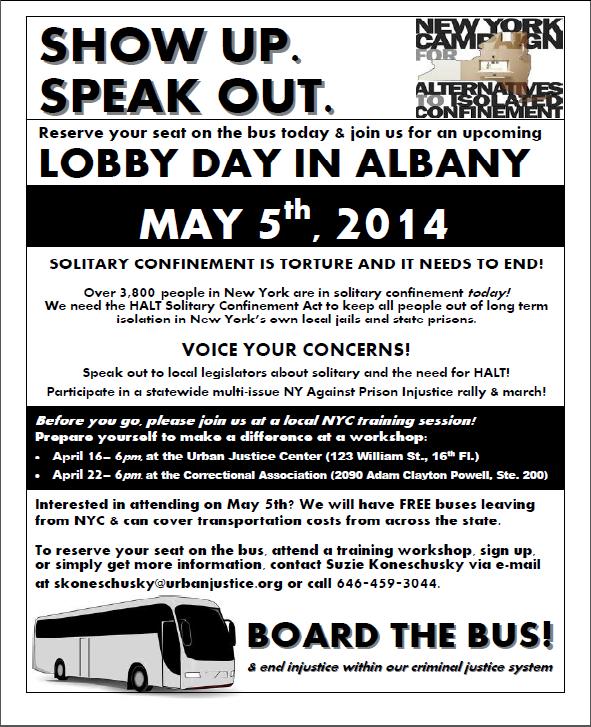
EVENTS: NY CAIC Organizes Lobby Day for HALT Solitary Confinement Act: May 5 in Albany

lobby day flyer

NEWS: Roundup of National News on Solitary Confinement, January/February 2014

Compiled by Fran Geteles-Shapiro.

February 26
Former Guantánamo detainees, with the support of the Center for Constitutional Rights and the Berlin-based European Center for Constitutional and Human Rights (ECCHR), have urged a French judge to subpoena Geoffrey D. Miller, a former Guantánamo Commander to explain his role in the torture and other serious mistreatment of former detainees.  They argue that Miller implemented techniques designed to “soften up” detainees, including sleep deprivation, extended isolation, forcing detainees to stand or crouch in “stress positions,” stripping detainees and exposure to extremes of heat and cold. http://www.ccrjustice.org/newsroom/press-releases/former-guant%C3%A1namo-detainees-urge-french-judge-subpoena-former-guant%C3%A1namo-commander-role-torture
http://www.ccrjustice.org/files/MILLER-DOSSIER-FINAL_en_20140226_public.pdf

February 25
During a hearing before the Senate Judiciary Subcommittee on the Constitution, Civil Rights and Human Rights, Assistant Majority Leader Dick Durbin (D-IL) called for an end to the use of solitary confinement for juveniles, pregnant women and those with serious and persistent mental illness. He also urged further reform of the detention practice so the United States can protect human rights, and improve public safety. http://www.durbin.senate.gov/public/index.cfm/videos?ID=4aa1119b-582d-4b48-93c6-d8367d05b5e2

According to reports from inside ADX in Florence, CO, eight to nine people held in the super-secret H-Unit are on hunger strike and are being force-fed.  One of the men, who’s been isolated for more than 10 years, since he wrote a letter to an imprisoned Muslim man in Spain, has filed a civil action that challenges his extreme confinement on the grounds that it violates his constitutional right to due process. He also claims the FBI is heavily involved in managing H-Unit, with its authority overriding that of BOP administrative staff even though by law the FBI is not authorized to run prisons in the U.S. http://solitarywatch.com/2013/11/21/voices-solitary-life-unit-h-adx-federal-supermax/

February 20
Rick Raemisch the new executive director of the Colorado Department of Corrections spent one day and night in solitary confinement.  He describes his reactions and his new commitment to reform.  But, while recognizing his sincerity, critics have also raised questions about whether the reforms he has already made are truly meaningful citing the facts that: 1) there is a problem with a very narrow definition of mental illness; 2) adequate care and treatment have not been provided; and, 3) people in the CO prisons with mental illness are still spending almost all their time alone in their cells, even though they are now in “treatment” units. http://www.nytimes.com/2014/02/21/opinion/my-night-in-solitary.html?action=click&contentCollection=Opinion&region=Footer&module=MoreInSection&pgtype=articlehttp://www.theatlantic.com/national/archive/2014/02/colorados-prison-director-spent-20-hours-in-solitary-but-thats-not-enough/283991/

Russell Maroon Shoatz, now 70-years-old, was released from solitary confinement into the general prison population at a State Correctional Institution in PA, ending more than 22 consecutive years in solitary confinement. He had been placed in solitary due to his work with the Pennsylvania Association of Lifers to abolish life-without-parole sentences. In 2013 he sued on the grounds that his placement and treatment in solitary confinement was a violation of the Eighth Amendment to the U.S. Constitution.  Both national and international advocates had fought for his release. http://abolitionistlawcenter.org/2014/02/20/media-release-russell-maroon-shoatz-released-from-solitary-confinement-first-time-in-general-population-in-more-than-22-years/

February 19
The New York Civil Liberties Union and the New York State Department of Community Corrections (DOCCS) announced an unprecedented agreement to negotiate reforms to the way solitary confinement is used in New York State’s prisons. The state will take immediate steps to remove youth, pregnant women and developmentally disabled and intellectually challenged people from extreme isolation. The state will also adopt sentencing guidelines and set maximum limits on isolation-sentence lengths – both for the first time.  A man who was formerly held in solitary and was a plaintiff in the lawsuit which led to this agreement said, “This agreement has the potential to change DOCCS’ focus to treatment, not just punishment, so some good will come of our time in prison.” http://www.nyclu.org/files/releases/Solitary_Stipulation.pdf

A panel of scientists at the American Association for the Advancement of Science’s recent meeting discussed some possible neurological factors behind the devastating psychological impacts of solitary confinement: 1) because proper functioning of the brain depends on daily sun exposure, the denial of access to sunlight interrupts circadian rhythms which can lead to depression; and 2) the hippocampus, which is involved in memory, geographic orientation, cognition and decision-making has been shown to shrink in the brains of people who are depressed or stressed for extended periods. The researchers note that these potential sources of damage would seem to make people who are in prison less equipped to re-enter society, and thus policies supporting them are unwise as well as inhumane. http://www.smithsonianmag.com/science-nature/science-solitary-confinement-180949793/#ixzz2uAZlmJGa

February 16
A new Intensive Mental Health Unit has been opened at the Maine State Prison which includes 32 beds with a staff of about 16 people. The new unit will provide programs, including recreational therapy, music therapy and art therapy. And the focus will be on recovery.  It is hoped that improvements in the care of mentally ill people in the prison will result.  However advocates have pointed out that there are still too many people in the prisons who are not receiving timely mental health services. http://www.sunjournal.com/news/maine/2014/02/16/bdnprisonmentalhealthp021614/1492949

February 12
Suicide is the most common cause of death in U.S. jails. A comprehensive study published by the American Journal of Public Health found that individuals in New York City jails who are sent to solitary confinement are nearly seven times more likely to try to hurt or kill themselves than those never assigned to solitary. Youth diagnosed with serious mental illness accounted for the majority of the self-harm acts.  And many hurt themselves in an effort to avoid time in solitary. http://www.washingtonpost.com/national/health-science/inmates-in-solitary-more-likely-to-hurt-themselves/2014/02/12/2dc7858a-942c-11e3-9e13-770265cf4962_story.htmlhttp://www.dailyjournal.net/view/story/3ed925aae9034710bd6041c8a986c55c/US–Solitary-Confinement-Self-Harm/#.Uxdvw85gjVY

February 11
The Bureau of Prisons has established a “High Security Mental Health Step-Down Unit” at the penitentiary in Atlanta, GA. which is designed to provide substantial long-term care and treatment for high-security mentally ill incarcerated people.  The program is adequately staffed with mental health professionals – i.e. for the 20 men expected to be held there, there are two psychologists, a psychiatric nurse and at least two other mental health professionals and who are devoted entirely to the unit so the men have continuous access to them. http://www.theatlantic.com/national/archive/2014/02/an-experiment-in-atlanta-may-transform-care-of-mentally-ill-prisoners/281228/

The State Senate Judiciary Committee of Kansas is considering legislation which would automatically confine individuals with a sentence of death or life without the possibility of parole to solitary confinement.  Supporters contend that segregating the worst and most dangerous incarcerated people would make it safer for the overall prison population.  But the Kansas Dept. of Corrections is objecting to the bill because it will be too costly and because it would create a dangerous environment for correctional officers.  A spokesperson for the ACLU also objected because of the detrimental psychological effects of solitary confinement. http://cjonline.com/news/2014-02-11/corrections-secretary-not-keen-mandatory-segregation

A bill has been introduced in the CA assembly that would rein in the use of indefinite detention in solitary confinement in California prisons.  Under the bill, SHU terms for administrative reasons would be capped at 36 months.  And good behavior credits, which allow individuals to earn shortened terms for complying with prison rules, will be restored for people who are in SHU for administrative reasons.  http://www.asmdc.org/members/a17/press-releases/ammiano-introduces-bill-to-limit-use-of-solitary-confinement

February 10 
The man who killed the former Director of Corrections in CO following his release directly from solitary confinement had, prior to that killing, forced a pizza delivery driver who he also killed to record a confused and rambling statement that seemed to denounce prison officials for putting people such as himself into solitary. http://www.denverpost.com/news/ci_25106855/evan-ebel-forced-pizza-driver-make-recording-before

February 6
A woman who was kept in a filthy, isolated New Mexico jail cell for months at a time, was often denied treatment for her mental illness, and was denied feminine hygiene products for lengthy stretches has reached a $1.6 million settlement with the county where she was held.  The settlement with also stops the county from holding people in a certain isolated cell for more than 48 hours. http://www.santafenewmexican.com/news/local_news/woman-settles-solitary-confinement-lawsuit/article_f4dab109-03e1-5998-9b05-6d75ac4f3654.html

After controversy over its use of solitary confinement, the Toledo Juvenile Home was closed by Ohio Gov.Branstad.But a Polk County judge has declared the closing unconstitutional and has ordered the facility re-opened. http://www.kcautv.com/story/24649275/judge-reorders-state-to-open-iowa-juvenile-home

February 4
Two former members of the Russian feminist rock band, Pussy Riot, who are touring the US after being released from a Russian prison spoke at a human rights concert organized by Amnesty International. In addition to calling on President Barack Obama to increase pressure on Russia over alleged human rights abuses there, they said they will also act for the rights of the incarcerated people in the United States. They plan to visit prisons and meet with nonprofit organizations to learn about the issue of solitary confinement in the U.S. http://america.aljazeera.com/articles/2014/2/4/pussy-riotplanstoextendactivismtouspoliticalprisoners.html

Incidents where corrections staff used force against individuals in the NYC jails have tripled between 2004 and 2013.  Meanwhile, prison officials downplay the number of traumatic injuries from these events and from internal fighting among the people held in the jails. They also downplay injuries requiring hospitalization – many of which they attribute to falls or work related injuries.  It is noted that the role of the excessive use of solitary confinement adds to the violence. http://www.huffingtonpost.com/brooklyn-defender-services/prison-reforms-city-jails-ny_b_4703405.html?utm_hp_ref=new-york&ir=New+York

February 3
Opponents of efforts to reform the use of solitary confinement in jails and prisons are worried that the violence at the jail facility on Rikers Island will get worse. They cite statistics that there were 73 stabbings and slashings in 2013, slightly up from the 71 in 2012 and a major spike from the 38 recorded in 2011.  They attribute the increase to gang wars within the jail and to mental health professionals having individuals released from solitary because of concern for their mental health. They also note that there are many people waiting to serve their punishments in solitary (“the bing”) because there are not enough available spots. http://www.nydailynews.com/new-york/nyc-crime/bloody-year-rikers-island-article-1.1600969#ixzz2v7M9VM00

Maryland legislators introduced bills, calling for an independent third-party review of correctional facilities relatign to “isolated confinement” requiring access to facility data, and calling for recommendations on specified topics (including “diverting” youth and people with serious mental illness) after the study is completed. The preamble of the bill cites statistics on the harms and overuse of solitary confinement. http://mgaleg.maryland.gov/2014RS/bills/hb/hb0787f.pdf

January
A report by John Marshall Law School includes accounts of the extreme isolation experienced by some individuals in immigration detention, and explores why a September 2013 Immigrations and Customs Enforcement (ICE) directive falls short in protecting vulnerable detainees, especially those with mental or medical illnesses.  Recommendations call for greater enforcement of regulations, greater oversight and transparency, and special attention to the treatment of vulnerable populations. http://www.jmls.edu/clinics/international-human-rights/pdfs/customs-segregation-report.pdf

The ACLU has released an online toolkit outlining how LGBTI advocates and directly affected individuals can leverage the Prison Rape Elimination ACT (PREA) to protect one of the most vulnerable populations in prison. https://www.aclu.org/end-abuse-protecting-lgbti-prisoners-sexual-assault

A new report by the Youth Justice Clinic of Cardoza Law School, RETHINKING RIKERS: MOVING FROM A CORRECTIONAL TO A THERAPUTIC MODEL FOR YOUTH argues that there should be a fundamental shift from a punitive to a therapeutic approach with practices that are specialized for and dedicated to youth rehabilitation, beginning with “the pressing need to eliminate the use of solitary confinement.”  The report notes that it does not work to reduce aggressive, violent, impulsive or disobedient behaviors.  Furthermore, among the detrimental effects of this practice they mention increased rates of recidivism. http://www.cardozo.yu.edu/sites/default/files/Rethinking%20Rikers_0.pdf

Data provided in response to the Texas Civil Rights Project’s information request shows that, while the overall population in administrative segregation has decreased by 14% since 2011, the number of individuals with mental illness in administrative segregation has increased by 17%. They now make up 32% of the administrative segregation population.  This % change is due partly to the smaller population, but also to more mentally ill people being sent to solitary.  A bill requiring third party review of adult and juvenile administrative segregation practices and policies—passed in the 2013 legislative session with overwhelming support, has yet to be implemented.  Since lawmakers had increased resources for mental health services and expressed intent to prioritize mental health in both incarcerated and free populations, there appears to be a possible discrepancy between legislative intent and implementation. http://texasinterfaithcenter.org/article/administrative-segregation-policy-brief

A recently issued policy from the American Public Health Association concludes that:   1) patients whose medical or mental health conditions contraindicate placement in segregation should be categorically excluded from solitary confinement, as should juveniles; 2) correctional authorities should implement policies that eliminate solitary confinement for security purposes unless no other less restrictive option is available to manage a current, serious, and ongoing threat to the safety of others; and, 3) punitive segregation should be eliminated. http://www.apha.org/advocacy/policy/policysearch/default.htm?id=1462

A recent position statement by the Society for Correctional Physicians acknowledges that prolonged segregation of incarcerated people with serious mental illness, with rare exceptions, violates basic tenets of mental health treatment.  Individuals in prison who are seriously mentally ill should be either excluded from prolonged segregation status or the conditions of their confinement should be modified in a manner that allows for adequate out-of-cell structured therapeutic activities and adequate time in an appropriately designed outdoor exercise area. http://societyofcorrectionalphysicians.org/resources/position-statements/restricted-housing-of-mentally-ill-inmates

NEWS: For Teens at Rikers Island, Solitary Confinement Pushes Mental Limits

By Trey Bundy and Daffodil Altan. From the Center for Investigative Reporting.

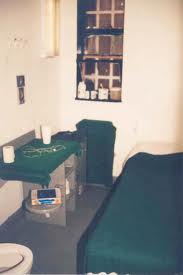
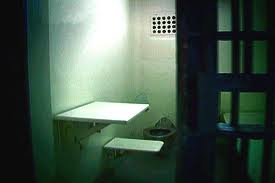
NEW YORK – There’s not much inside “the box.” Cinder block walls rise up and close in. There’s a bunk, a sink, a toilet and a metal door with a small mesh window. Food comes through a slot. Sometimes, mice and roaches scamper through.

Teenagers kept in the box sometimes hallucinate and throw fits. They splash urine around or smear their blood and shit on the walls. The concrete room gets so hot in the summertime that the floor and walls sweat.

Ismael Nazario’s longest stretch in the box lasted four months. He paced a lot, talking to himself and choking back tears and rage. He tried to block out the screaming of the teenage boys in other jail cells in his unit, but he couldn’t. Sometimes, he would stand at the door of his tiny cell and yell.

Read full article here


VOICES: Doing “Bing Time”: Memories of a Mental Health Worker in Rikers Island’s Solitary Confinement Unit

A cell in Rikers Island's Central Punitive Segregation Unit.

A cell in Rikers Island’s Central Punitive Segregation Unit.

Reprinted from Solitary Watch.

The following post is a chapter from an unpublished book by Mary Buser, who worked in various capacities in the mental health system on Rikers Island. In Buser’s own words: “I worked in the Rikers Mental Health Department as a psychiatric social worker for five and a half years, leaving Rikers in 2000. I started off as a student intern in the island’s sole women’s jail…[and] returned to Rikers to work in a maximum security men’s jail…[then] was promoted to assistant chief of Mental Health in another jail, where I supervised treatment to the island’s most severely mentally ill inmates. From there, I was transferred to my fourth and final jail, which was connected to the “Central Punitive Segregation Unit,” aka, the Bing. Here, I supervised a mental health team in treating inmates held in solitary confinement–determining whether or not someone warranted a temporary reprieve based on the likelihood of a completed suicide. Although I had become disillusioned with the criminal justice system, the Bing was my Rikers undoing. The final section of my manuscript is focused on my daily trips to the Bing, the inmates who occupied these cells, and my struggle to justify doing this work.” Names have been changed to protect the privacy of the individuals involved in the episodes Buser describes.

As jails have come to replace psychiatric hospitals as repositories for people with mental illness, Rikers become one of the nation’s largest inpatient mental health centers (second only to the L.A. County Jail). A disproportionate number of these psychiatrically disabled individuals end up in solitary confinement, doing “Bing time” for rule infractions precipitated by their illness. Buser’s account of her time overseeing treatment in “the Bing” is of particular interest now, when years of activism by the Jails Action Coalition and two scathing reports commissioned by the New York City Board of Correction have finally spurred efforts to reduce the use of solitary and improve mental health treatment on Rikers. These efforts have thusfar yielded at best mixed results. –James Ridgeway

. . . . . . . . . . . . . . .

At the end of a long cinderblock corridor, a guard in an elevated booth passes the time with a paperback book.  Across from the booth, a barred gate cordons off a dim passageway.  Along the passageway wall are the words:  CENTRAL PUNITIVE SEGREGATION UNIT.

The guard looks up as I approach, and nods.  As acting chief of “Mental Health,” I’m a regular over here at the “Bing” – an unlikely nickname for this five-story tower of nothing but solitary cells — 100 of them on each floor.  Designed for Rikers Island’s most recalcitrant inmates, the occupants of these cells have been pulled out of general population for fighting, weapons possession, disobeying orders, assault on staff.  The guards refer to them as “the baddest of the bad” – “the worst of the worst.”  I’m not so sure about that.

The guard throws a switch and the barred gate shudders and starts opening.  Around a bend, I step into an elevator car.  Since the problem inmate is on the third floor, I hold up three fingers to a corner camera, waiting to be spotted on a TV monitor.  This is no ordinary elevator — no buttons to push here, likely engineered for some security purpose.  The sweaty little box starts lifting, and as the muffled wails of the punished echo through, my stomach tightens — the way it does every time I’m called over here, which is often.  Solitary confinement is punishment taken to the extreme, inducing the bleakest of depression, plunging despair, and terrifying hallucinations.  The Mental Health Department looms large in a solitary unit – doling out anti-depressants, anti-psychotics, and mountains of sleeping pills.  If these inmates had no mental health issues before they entered solitary, they do now.  But even the most potent medications reach only so far, and when they can no longer hold a person’s psyche together – when human behavior deteriorates into frantic scenes of self-mutilation and makeshift nooses – we’re called to a cell door.

The elevator rattles open on the third floor.  Ahead, a foreboding window separates two plain doors, each one leading onto a 50-cell wing.  Behind the window, correctional staff hover over paperwork.  A logbook is thrust out, I sign it, and point to the door on the left, ‘3 South.’  When the knob buzzes, I pull the door open and step into what feels like a furnace.  A long cement floor is lined with gray steel doors that face each other – twenty-five on one side, twenty-five on the other.  Each door has a small window at the top, and on the bottom, a flap for food trays.

At the far end, Dr. Diaz and Pete Majors are waiting for me.  I hesitate for a moment, dreading the walk through the gauntlet of misery.  The smell of vomit and feces hangs in the hot, thick air.  Bracing myself, I start past the doors, trying to stay focused on my colleagues.  Still, I can see their faces – dark-skinned, young – pressed up against the cell windows, eyes wild with panic.  “Miss! Help!  Please, Miss!!”  They bang and slap the doors, sweaty palms sliding down the windows.  “We’re dying in here, Miss – we’re dying!”  Resisting my natural instinct to rush to their aid, I keep going, reminding myself that there’s a reason they’re in here – that they’ve done something to warrant this punishment.  The guards, themselves sweat-soaked and agitated, amble from cell to cell, pounding the doors with their fists, spinning around and kicking them with boot heels — “SHUT—THE  FUCK– UPPP!!

[Read more…]

NEWS: Lawsuit Secures New Limits on Solitary Confinement in New York’s Prisons

A cell in a New York State "Special Housing Unit."

A cell in a New York State “Special Housing Unit.”

By Jean Casella. Reprinted from Solitary Watch.

Under pressure from a lawsuit brought by the New York Civil Liberties Union on behalf of three people held in long-term solitary confinement, New York has agreed to a set of changes to its use of solitary and other forms of extreme isolation in state prisons. The agreement, announced on Wednesday, would bar certain vulnerable populations from isolated confinement, while for the first time setting firm guidelines and maximum durations for isolating others.

New York currently holds some 3,800 men, women, and children in 23-hour-a-day isolation in small, sometime windowless cells, either alone or with one other person. “The conditions inside New York’s isolation cells are deplorable and result in severe physical and psychological harm,” stated the original complaint in Peoples v. Fischer, filed in Federal District Court in Manhattan in December 2012. The complaint, which charges the state with violating the plaintiffs’ Constitutional rights under the 8th and 14th Amendments, continues:

Individuals are confined idle and isolated for months and years on end in tiny cells. They are allowed only one hour of exercise a day in barren cages smaller than their cell. As additional punishment, prison staff may issue orders depriving individuals of what little remains—access to nourishing and edible food, exercise, bedding, and showers may all be denied. At some prisons, two men are forced to share a single isolation cell for weeks and months on end, often leading to violence. Requests for mental health care must be discussed through the food slot in the cell door.

People are placed in isolation on the word of corrections staff, who issue tens of thousands of disciplinary “tickets” each year that result in time in the state’s numerous Special Housing Units (SHUs) or its two supermax prisons. Five out of six tickets are for nonviolent misbehavior, according to a 2012 report by the NYCLU, and disciplinary hearings are at best pro forma. The average SHU sentence is five months, but many extend for years and a few have stretched to decades. UN Special Rapporteur on Torture Juan Méndez has stated that solitary confinement beyond two weeks is cruel, inhuman, and degrading treatment, and often qualifies as torture.

The most dramatic reform brought about by the agreement between the state and the NYCLU is a ban on using solitary to discipline youth under the age of 18, which makes New York the largest state in the nation to prohibit the practice for juveniles in state prisons. In New York, 16 and 17 year olds accused of a felony are automatically tried and incarcerated as adults, and large numbers have ended up in the SHUs, sometimes for “their own protection.” Under the new deal, juveniles with serious disciplinary violations would be would be placed in special units with more out-of-cell time and special programming.

The agreement also bans placing pregnant women in solitary, and sets a 30-day limit on isolating people with developmental disabilities. A 2007 court settlement and a law enacted in 2011 already prohibit the use of isolated confinement for people with serious mental illness. Since the passage of the SHU Exclusion Act, several hundred people have been moved from solitary into special Residential Mental Health Units (though evidence suggests that hundreds of others remain isolated in spite of mental illness, largely due to issues around diagnosis).

“It made sense to immediately remove these vulnerable populations from extreme isolation,” Taylor Pendergrass, the NYCLU’s lead attorney in the suit, told Solitary Watch. “But in the longer term, we believe this process will bring about more comprehensive reforms that will affect many more people.” Those reforms will come, in large part, in the form of “sentencing guidelines” that designate punishments for different disciplinary infractions, and for the first time set maximum sentences in the SHU. The negotiated guidelines are covered by a confidentiality agreement until staff can be trained and the new rules put in place–a process that should take no more than nine months, Pendergrass said.

The deal also calls for New York State and the NYCLU to each choose an expert who will assess the use of isolated confinement throughout the prison system over the next two years and make further recommendations for change. The state has selected James Austin, a widely known expert on “prisoner classification” whose report to the Colorado Department of Corrections led to a reduction in the numbers of individuals held in long-term solitary in that state.

The NYCLU has chosen as its expert Eldon Vail, former head of the Washington State Department of Corrections. Vail has said publicly that solitary confinement produces “disastrous results.” He is known for conducting studies and programs in Washington’s state prisons aimed at not only reducing the use of solitary, but also tempering its effects by providing programming, therapy, and group activities for those separated from the general prison population. “He knows that treatment works better than torture,” Pendergrass said of Vail. “He is a pioneer in evidence-based approaches to prison safety and security, which do not include extreme isolation and sensory deprivation.”

The choices suggest that while the state is on board for some modest reductions in the numbers of people it holds in solitary and the length of time they spend there, the NYCLU envisions more sweeping change, which would eliminate the total isolation of solitary confinement in favor of a more rehabilitative model. In this, it is aligned with other reform efforts in the New York, including a bill introduced last month in the state legislature that aims to “fundamental transform” how prisons respond to people’s “needs and behaviors” by replacing SHUs with “Residential Rehabilitation Units.”

These more comprehensive reforms could help one group that is not affected by the current rounds of changes–those held in “administrative segregation” rather than “disciplinary segregation.” These include individuals who are classified as safety risks and sometimes spend decades in solitary confinement. Among these is William Blake, who has spent more than 26 years in isolation and whose essay on life in the SHU, “A Sentence Worse Than Death,” was published by Solitary Watch last year.

In the meantime, Pendergrass expects there will be some who feel the current deal goes too far, just as others believe it does not go far enough. He did not specify where the “pushback” is likely to come from. But in the past, correctional officers unions have generally been strong opponent of any restrictions on the use of solitary confinement.
In a statement to the New York Times, the New York State Correctional Officers and Police Benevolent Association said of the new agreement: “Today’s disciplinary confinement policies have evolved over decades of experience, and it is simply wrong to unilaterally take the tools away from law enforcement officers who face dangerous situations on a daily basis. Any policy changes must prioritize the safety and security of everyone who works or lives in these institutions.”

The NYCLU’s lawsuit is on hold while Austin and Vail complete their work. If the group–and its incarcerated clients–are not satisfied with the results, the litigation may resume. Meanwhile, the three named plaintiffs in the suit–Leroy Peoples, Dwayne Richardson, and Tonja Fenton–have all been released to the general population from the SHUs. “Life in the box stripped me of my dignity, and made me feel like a chained dog,” Peoples said in 2012. The lawsuit that bears his name promises to spare many others the same suffering.

NEWS: New York Lawmakers Introduce Bill to End Long-Term Solitary Confinement

NY State Assembly Member Jeffrion Aubry speaks at a press conference announcing the HALT Solitary Confinement Act. Photo: Bernadette Evangelista

NY State Assembly Member Jeffrion Aubry speaks at a press conference announcing the HALT Solitary Confinement Act. Photo: Bernadette Evangelista

By Jean Casella. Reprinted from Solitary Watch.

“I’m here in a steel coffin,” Jessica Casanova’s nephew wrote to her from an isolation cell. “I’m breathing, but I’m dead.” Her nephew, she said, “has never been the same” after spending time in solitary confinement, and his experience compelled her to speak out for the thousands held in extreme isolation in New York’s prison and jails.

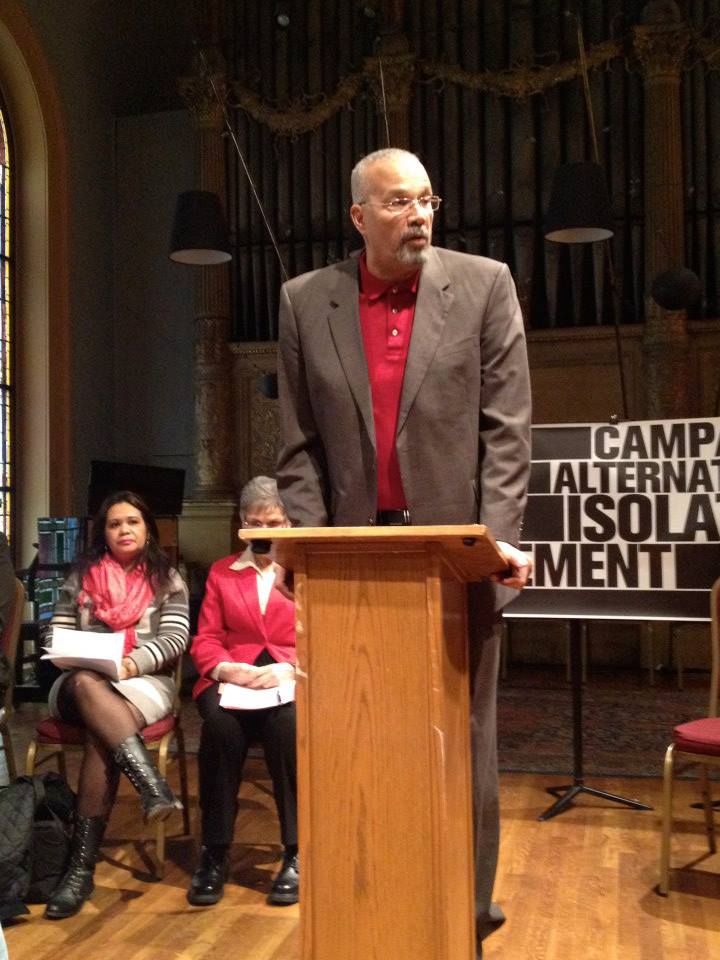
Casanova was one of half a dozen speakers at a press conference held on Friday to announce the introduction of a bill in the New York State legislature that would virtually end the use of solitary and other forms of isolated confinement beyond 15 days. The bill, called the Humane Alternatives to Long-Term (HALT) Solitary Confinement Act, aims to bring sweeping reform to a state where nearly 4,000 people are held in 22-to 24-hour isolation on any given day in more than 50 prisons, with at least a thousand more in solitary in local jails.

Activists from the New York Campaign for Alternatives to Isolated Confinement (CAIC), which hosted the press conference and worked with the sponsors to draft the bill, encouraged those arriving for the mid-morning event at Greenwich Village’s Judson Memorial Church to try samples of “the Loaf.” The dense, bread-like substance, made from flour, milk, yeast, grated potatoes and carrots, is served with a side of raw cabbage as an additional form of punishment for those held in solitary confinement in New York’s prisons.

Introducing the speakers, Claire Deroche of CAIC and the National Religious Campaign Against Torture called the bill “the most comprehensive and progressive legislative response to date to the nationwide problem of solitary confinement in our prisons and jails.” In addition to placing a 15-day limit on solitary, the bill would create new alternatives for those deemed a longer-term safety risk to others, replacing the punishment and deprivation of New York’s “Special Housing Units” (SHUs) with a more rehabilitation-minded approach.

The bill is being sponsored in the Assembly by Jeffrion Aubry (D, Queens), called solitary confinement “an issue whose time has come.” Aubry, who also sponsored the 2008 SHU Exclusion Law, which limited the use of solitary on individuals with serious mental illness, said it was time to set standards for treatment of all people in prison, regardless of their offenses. “I don’t believe that having committed a crime suspends your human rights” said Aubry. “That’s not the America I want to live in. That’s not the New York State I want to live in.”

The legislation’s Senate sponsor, Bill Perkins (D, Harlem) pointed out that solitary is increasingly being seen as a “moral issue” and a “crime against humanity.” The 15-day limit set by the bill conforms to recommendations made by UN Special Rapporteur on Torture, Juan Méndez, but far surpasses restrictions currently placed on solitary in any American prison system. Perkins expressed his hope that the bill would find supporters in both bodies of the legislature, and that “the governor will work with us.”

New York City Council Member Daniel Dromm, who has supported measures to limit solitary confinement in city jails, described seeing a friend deteriorate after being placed in isolation on Rikers Island. The friend, whom Dromm described as “the gentlest person in the world,” was also “bipolar and drug addicted,” and was placed in solitary for five months for “cigarettes and talking back.” The HALT Solitary Confinement Act would ban the use of isolation altogether on vulnerable populations, including youth, the elderly, and people with mental or physical disabilities.

Five Mualimm-ak began his statement by telling listeners: “I lived five years of my life in a space the size of your bathroom.” Mualimm-ak, who said he never committed a violent act in prison, was given stints in solitary for offenses as minor as “wasting food” by “refusing to eat an apple.” The Department of Corrections “uses the rules for the purposes of abuse,” he said. “New York State should be a leader” when it comes to prison conditions, said Mualimm-ak, who has been out of prison for two years and is working against what he calls “solitary torture.” Instead, New York state prisons and city jails practice isolated confinement at levels well above the national average.

Wrapping up the event, Scott Paltrowitz of the Correctional Association of New York and CAIC outlined the major provisions of the HALT Solitary Confinement Act. In addition to banning special populations from solitary and setting a 15-day limit for all others, Paltrowitz said, the bill would eliminate the use of isolation to punish minor offenses, such as “having too many postage stamps or talking back to a guard.”

The bill would also create secure “residential rehabilitation units (RRUs) for those who need to be separated because they pose a genuine danger to the general population. RRUs would be “aimed at providing additional programs, therapy, and support to address underlying needs and causes of behavior, with 6 hours per day of out-of-cell programming plus one hour of out-of-cell recreation.” The legislation, said Paltrowitz, “recognizes that we need a fundamental transformation of how our public institutions address people’s needs and behaviors, both in our prisons and in our communities.”

CAIC describes itself as joining together “advocates, formerly incarcerated persons, family members of currently incarcerated people, concerned community members, lawyers, and individuals in the human rights, health, and faith communities throughout New York State.” According to its website, the group considers solitary and all forms of prison isolation to be “ineffective, counterproductive, unsafe, and inhumane,” and cites evidence showing that solitary confinement increases recidivism while failing to reduce prison violence.

The legislation, drafted over the past year, is more ambitious and far-reaching than bills on solitary that have been introduced in other states. As a result, it is unlikely to pass in anything resembling its current form–but supporters are determined to push forward. “The HALT Solitary Confinement Act implements rational humane alternatives to the costly, ineffective, and abusive use of long-term solitary confinement in New York prisons and jails,” said Sarah Kerr of the Legal Aid Society’s Prisoners’ Rights Project, who helped draft the legislation. “The need for reform is well-documented and the time for change is now.”

The New York State Department of Corrections and Community Supervision (DOCCS) did not respond to a request for comment on the legislation.

NEWS: New York Lawmakers Introduce Sweeping Reforms to Use of Solitary Confinement in Prisons and Jails

Press release from the New York Campaign for Alternatives to Isolated Confinement. January 31, 10:30 am

New York — At a mid-morning press conference at Judson Memorial Church in Greenwich Village, New York legislators will join advocates, survivors of solitary confinement, and their families to announce the introduction of the Humane Alternatives to Long-Term (HALT) Solitary Confinement Act (A08588 / S06466).

Introduced in both the Assembly and the Senate, the pioneering bill is being hailed by supporters as the most comprehensive and progressive legislative response to date to the nationwide problem of solitary confinement in prisons and jails. As written, it would virtually eliminate a practice that has been increasingly denounced as both dangerous and torturous, while protecting the safety of incarcerated individuals and corrections officers.

According to Assembly Member Jeffrion Aubry, who is sponsoring the bill in the Assembly, “New York State was a leader for the country in passing the 2008 SHU Exclusion Law, which keeps people with the most severe mental health needs out of solitary confinement. Now we must show the way forward again, ensuring that we provide safe, humane and effective alternatives to solitary for all people.”

“Solitary confinement makes people suffer without making our prisons safer. It is counter-productive as well as cruel,” said Senator Bill Perkins, the bill’s Senate sponsor. “Solitary harms not only those who endure it, but families, communities, and corrections staff as well.”

Currently, about 3,800 people are in Special Housing Units, or SHUs, with many more in other forms of isolated confinement in New York’s State prisons on any given day, held for 23 to 24 hours a day in cells smaller than the average parking space, alone or with one other person. More than 800 are in solitary confinement in New York City jails, along with hundreds more in local jails across the state.

New York isolates imprisoned people at levels well above the national average, and uses solitary to punish minor disciplinary violations. Five out of six sentences that result in placement in New York State’s SHUs are for non-violent conduct. Individuals are sent to the SHU on the word of prison staff, and may remain there for months, years, or even decades.

The HALT Solitary Confinement Act bans extreme isolation beyond 15 days–the limit advocated by UN Special Rapporteur on Torture Juan E. Méndez, among others. It also bars vulnerable populations from being placed in solitary at all–including youth, the elderly, pregnant women, LGBTI individuals, and those with physical or mental disabilities.

“No person should be put in solitary confinement except when they are a risk to  someone else,” said New York City Council Member Daniel Dromm. “As a major opponent of the practice, I have introduced three pieces of legislation into the City Council. I applaud the proposed state legislation that sets parameters on who can and who cannot be placed in solitary confinement and limits the amount of time they are forced to stay there.”

For those who present a serious threat to prison safety and need to be separated from the general population for longer periods of time, the legislation creates new Residential Rehabilitation Units (RRUs)–high-security units with substantial out-of-cell time, and programs aimed at addressing the underlying causes of behavioral problems.

“Isolation does not promote positive change in people; it only damages them,” said Jennifer J. Parish of the Urban Justice Center’s Mental Health Project. “By requiring treatment and programs for people who are separated from the prison population for serious misconduct, the legislation requires Corrections to emphasize rehabilitation over punishment and degradation.”

“The HALT Solitary Confinement Act recognizes that we need a fundamental transformation of how our public institutions address people’s needs and behaviors, both in our prisons and in our communities,” said Scott Paltrowitz of the Correctional Association of New York. “Rather than inhumane and ineffective punishment, deprivation, and isolation, HALT would provide people with greater support, programs, and treatment to help them thrive, and in turn make our prisons and our communities safer.”

Many of those represented at the press conference are members of the New York Campaign for Alternatives to Isolated Confinement (CAIC), which was instrumental in drafting the bill. CAIC unites advocates, concerned community members, lawyers, and individuals in the human rights, health, and faith communities throughout New York State with formerly incarcerated people and family members of currently incarcerated people.

“Solitary is torture on both sides of the prison walls,” said family member Donna Sorge-Ruiz, whose fiancé is currently in solitary. “Loved ones on the outside suffer right along with those in prison, every day that they endure this pain. It must stop!”

The widespread use of long-term solitary confinement has been under fire in recent years, in the face of increasing evidence that sensory deprivation, lack of normal human interaction, and extreme idleness can lead to severe psychological damage. Supporters of the bill also say that isolated confinement fails to address the underlying causes of problematic behavior, and often exacerbates that behavior as people deteriorate psychologically, physically, and socially.

In New York each year, nearly 2,000 people are released directly from extreme isolation to the streets, a practice that has been shown to increase recidivism rates.

“The damage done by solitary confinement is deep and permanent,” said solitary survivor Five Mualimm-ak. An activist with CAIC and the Campaign to End the New Jim Crow, Mualimm-ak spent five years in isolated confinement despite never having committed a violent act in prison. “Having humane alternatives will spare thousands of people the pain and suffering that extreme isolation causes–and the scars that they carry with them back into our communities.”

Several state prisons systems, including Maine, Mississippi, and Colorado, have significantly reduced the number of people they hold in solitary confinement, and have seen prison violence decrease as well. HALT takes reform a step further by also providing alternatives for the relatively small number of individuals who need to be separated from the general population for more than a few weeks. Advocates see the bill not only as a major step toward humane and evidence-based prison policies, but also as a model for change across the country.

“Article 5 of the United Nations Declaration of Human Rights, states that ‘No one shall be subjected to torture or to cruel, inhuman, or degrading treatment or punishment,’” said Laura Markle Downton of the National Religious Campaign Against Torture. “As people of faith, we recognize the use of solitary confinement in a prisons, jails and detention centers fundamentally violates this prohibition against torture. Now is the time for New York to lead the way in bringing an end to this human rights abuse plaguing our justice system nationally.”

“The HALT Solitary Confinement Act implements rational humane alternatives to the costly, ineffective, and abusive use of long-term solitary confinement in New York prisons and jails,” said Sarah Kerr of the Legal Aid Society’s Prisoners’ Rights Project. “The need for reform is well-documented and the time for change is now.”

PRESS CONFERENCE DETAILS:


Date/Time/ Location: Friday, January 31, 10:30 am

Judson Memorial Church, Meeting Room Balcony

55 Washington Square South (between Thompson and Sullivan Streets)

Speakers:

Assembly Member Jeffrion L. Aubry (D, 35th District, Queens), Assembly sponsor

Senator Bill Perkins (D, 30th District, Harlem), Senate sponsor

City Council Member Daniel Dromm (D, 25th District, Queens)

Five Mualimm-ak, survivor of solitary confinement in New York prisons and Campaign for Alternatives to Isolated Confinement

Jessica Casanova, aunt of individual currently in solitary and Campaign for Alternatives to Isolated Confinement

Scott Paltrowitz, Correctional Association of New York and Campaign for Alternatives to Isolated Confinement

Claire Deroche, National Religious Campaign Against Torture and Campaign for Alternatives to Isolated Confinement


PRESS KIT INCLUDES:

Press Release

Fact Sheet on Solitary Confinement in New York State

Summary of the Humane Alternatives to Long-Term (HALT) Solitary Confinement Act

Full Text of HALT Act (A08588 / S06466)

New York Voices from Solitary Confinement

“Solitary Confinement’s Invisible Scars,” op-ed by Five Mualimm-ak


FOR MORE INFORMATION, CONTACT:

Scott Paltrowitz, 212-254-5700, spaltrowitz@correctionalassociation.org

Sarah Kerr, 212-577-3530, SKerr@legal-aid.org

Five Mualimm-ak, 646-294-8331, endthenewjimcrow@gmail.com

www.nycaic.org

#  #  #

EVENTS: Lawmakers, Advocates, and Solitary Survivors Join to Announce Legislation to Limit Solitary Confinement in New York’s Prisons and Jails

MEDIA ADVISORY: PRESS CONFERENCE

 WHEN: Friday, January 31, 10:30 am

WHERE: Judson Memorial Church, Meeting Room Balcony

55 Washington Square South (between Thompson and Sullivan Streets)

 WHO:

Assembly Member Jeffrion L. Aubry (D, 35th District, Queens), Assembly sponsor

Senator Bill Perkins (D, 30th District, Harlem), Senate sponsor

City Council Member Daniel Dromm (D, 25th District, Queens)

Five Mualimm-ak, survivor of solitary confinement in New York prisons

Jessica Casanova, aunt of man in solitary confinement

Scott Paltrowitz, Correctional Association of New York and Campaign for Alternatives to Isolated Confinement

Claire Deroche, National Religious Campaign Against Torture and Campaign for Alternatives to Solitary Confinement

WHAT:

The Humane Alternatives to Long-Term (HALT) Solitary Confinement Act.

Just introduced in the New York State Assembly (A08588) and Senate (S06466), this pioneering bill is being hailed by supporters as the most comprehensive and progressive legislative response to date to the nationwide problem of solitary confinement in prisons and jails. As written, it would virtually eliminate a practice that has been increasingly denounced as both dangerous and torturous, while protecting the safety of incarcerated individuals and corrections staff. More than 5,000 people are currently being held in solitary and other forms of isolated confinement in New York’s state prisons and local jails.

 On hand and available for interview will be the bill’s Assembly and Senate sponsors and other legislators, along with individuals who have personally experienced solitary confinement, family members of those currently in solitary, and advocates from the New York Campaign for Alternatives to Isolated Confinement, which was instrumental in drafting the bill.

FOR MORE INFORMATION:

Scott Paltrowitz, 212-254-5700, spaltrowitz@correctionalassociation.org

Sarah Kerr, 212-577-3530, SKerr@legal-aid.org

Five Mualimm-ak, 646-294-8331, endthenewjimcrow@gmail.com

NEWS: As New York City Jails Amend Their Solitary Confinement Practices, Abuses on Rikers Island Continue

rikers demo 1By Aviva Stahl. Reprinted from Solitary Watch.

In early January the Wall Street Journal reported that the New York City Department of Correction (DOC) had ceased using solitary confinement as a form of punishment for people with mental illness. The last of the Mental Health Assessment Unit for Infracted Inmates (MHAUII) units was shuttered on December 31, replaced by a two-tiered system said to improve treatment. The step was hailed a significant achievement for outgoing DOC City Commissioner Dora Schriro, whose department came under fire this past fall after two reports lambasted the DOC for violating its own standards in its treatment of the mentally ill.

However, a meeting on Tuesday morning of the Board of Correction (BOC), an independent body that monitors the City’s jail system, presented a far different picture of conditions for individuals with mental illness on Rikers Island – as well as a different version of how changes in the DOC’s solitary confinement policies have come about.

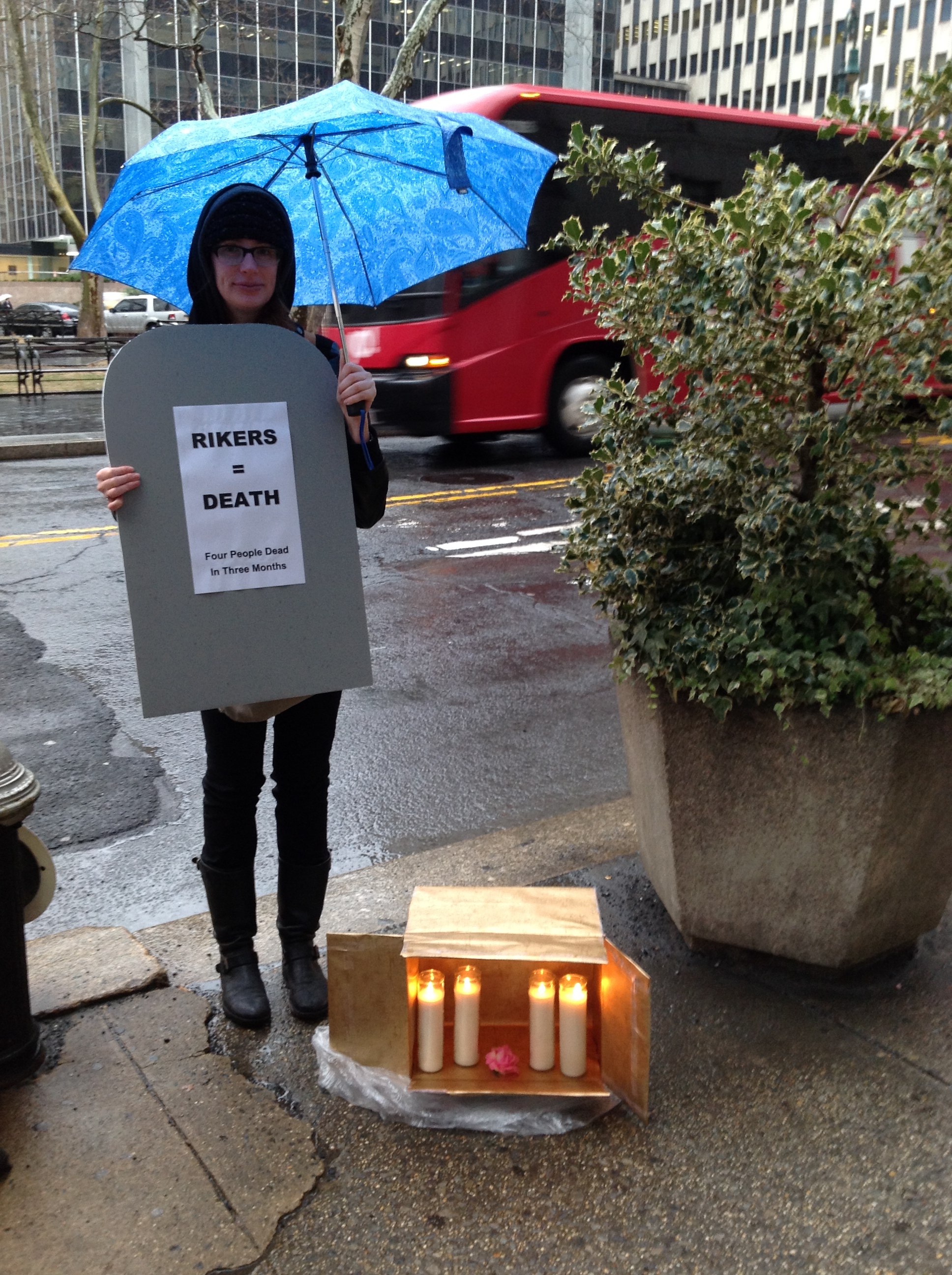
Just after 8 am on Tuesday, in the chilly morning rain, activists from the advocacy group Jails Action Coalition (JAC) stood on the sidewalk outside the municipal office building on Worth Street where the BOC was scheduled to meet. They were holding a vigil for the four individuals who have died in City jails in the past three months, carrying tombstone-shaped posters reading “RIKERS=DEATH” beside a makeshift alter with four candles, and singing and chanting to the people passing by.

Leah, a longtime JAC activist, explained that she had braved the weather for the sake of her godson, who has a psychiatric disability and is currently incarcerated on Rikers Island. She was waiting to see whether the recent changes made by the DOC would actually have an impact on the people inside. As she explained, sometimes the DOC enacts new policies to appease the citizenry “but really, it’s the same old thing.”

At just past nine o’clock the vigil participants passed through security and joined the BOC meeting on the third floor. The bulk of time was dedicated to discussing the quality of care at the recently developed Restrictive Housing Units (RHU) and Clinical Alternative to Punitive Segregation (CAPS) program, the facilities meant to replace MHAUII. According to DOC protocol, individuals who violate prison rules will now be sent to one of the two units: the RHU for those who are deemed less severely ill, who will still spend time in solitary but have access to therapeutic services; and the CAPS unit, modeled after a psychiatric hospital, for those with more serious illnesses.

According to the WSJ article, prison advocates were somewhat critical of the proposed changes after they were announced, calling the RHU model “far too punitive” and expressing concerns that individuals with mental illness might be placed in CAPS regardless of whether they broke the rules. The Board’s initial discussion seemed to support many of their concerns.

BOC members shared the details of their first site visit, on December 5, to the newly opened RHU at Rose M Singer Center (RMSC), the main women’s jail on Rikers. According to the Honorable Bryanne Hamill, a former New York Family Court judge,  Board staff asked for assistance from a nearby corrections officer when one woman – who had smeared feces on the window of her cell – failed to respond to their knocks. The CO opened the food slot in the cell’s solid steel door and shined light inside, but was still unable to ascertain if the occupant was conscious.

At the prodding of BOC members, the CO summoned four captains – but it was not until the Board notified Commissioner Schriro that the door was eventually unlocked. The woman was found unresponsive on the floor under the bed with a ligature wrapped around her neck. By the time the woman was taken out of her cell by medical staff, nearly an hour had passed since the visitors had first arrived at her door. Judge Hamill added that she spoke to another prisoner who told her that the unresponsive woman had been threatening suicide; Hamill reassured her that the woman had been found alive.

BOC member Dr Robert L. Cohen, a key player in efforts to reform solitary on Rikers, also participated in site visits. Cohen stressed that neither the COs nor the leadership in NYC’s prisons seemed prepared for the task at hand.  Although the RHU program at Otis Bantum Correctional Center (OBCC) technically opened on December 19th, Cohen reported that the jail’s warden was “not aware that there was an RHU at OBCC” when Cohen spoke to her on January 3. Cohen also emphasized his concern that the DOC has no plan to identify and train officers and captain staff who are willing to work in the units on a regular basis.

Both Dr. Cohen and Judge Hamill expressed disappointment that access to therapeutic programming in the RHU had so far been almost non-existent. They did, however, have some praise for the new mental health programs established at the DOC, noting that they were greatly impressed with the ongoing quality of care in the CAPS units.

At the end of the meeting, Jennifer Parish, the director of criminal justice advocacy at the Urban Justice Center’s Mental Health Project and a member of JAC, spoke about her own visit to the RHU at RMSC, which occurred just days after the BOC’s.  One woman held in the unit relayed to Parish what had happened after she told the BOC member (presumably Judge Hamill) that the woman found unconscious had been threatening suicide. After the Board members left the prison, she said, a CO approached her cell to tell her, “there won’t be any food for you.” Parish expressed frustration that this kind of retaliation of could go on even when BOC was involved.

Commissioner Schriro’s voice cracked with emotion as the meeting came to a close. Schriro, who is leaving the DOC to take a job in Connecticut, has been broadly praised for the recent changes in DOC policy, and commented to the press that her department was “proud to have met this significant milestone.”  In truth, however, solitary confinement increased significantly under Schriro’s tenure. In 2011 alone the number of punitive segregation cells at Rikers grew by 45 percent,  and by the time the  BOC-commissioned reports were released this past fall, New York City had one of the highest rates of solitary confinement in the country.

The Correction Officers’ Benevolent Association (COBA) pressed particularly hard for the increase in punitive bed space, attributing a spike in attacks on COs to the backlog of prisoners waiting to serve time in “the Bing,” as solitary confinement on Rikers is called. At a November 2011 City Council meeting, Schriro was grilled by City Council member Elizabeth Crowley about the problem.  Schriro reassured her that capacity was being expanded as quickly as possible: ” Every bed that can be converted is being converted.”

Community groups maintain that the DOC only considered adopting new policies as a result of the press fall-out from the BOC-commissioned reports – and that the reports were, in turn, ordered as a result of the campaigning of JAC and other advocates. Those same factors, along with pressure from a few BOC members, led the Board in September to vote to commence “rule-making” to eventually set new policies limiting the use of solitary in City jails.

Tuesday’s meeting was the last for Commissioner Schriro, but her legacy is not the only thing in flux. Mayor Bill DeBlasio has yet announce to his appointment to the post of DOC commissioner, and there are mixed signals as to whether he will live up to the progressive image he cultivated during his campaign.

Last Friday at Brooklyn College, DeBlasio emceed the graduation for the DOC’s newest recruits, telling them: “You’re protecting all of us….You’re protecting each other. You have each other’s backs. And you’re also protecting some people who have made mistakes.” He continued, “We’re not happy with some of the choices those individuals made, but they’re still our fellow citizens, and we’re hopefully in the process of helping them back to a better path.”

Yet there are some red flags to suggest substantial prison reform isn’t on DeBlasio’s agenda. Bill Bratton, the mayor’s appointment for police commissioner, has pursued racially discriminatory policing policies in the past.  Moreover, during his campaign DeBlasio was endorsed by COBA – a worrying sign for advocates, given that the role the union played in increasing the use of solitary and their resistance to adopting alternative solutions.

For Sarah Kerr, a staff attorney in the Prisoners’ Rights Project of The Legal Aid Society, the BOC’s experiences on the tour reveal the deeply protracted nature of the problems within the DOC.  She wondered aloud what it means that it took an hour for the woman’s cell door to be opened, even when BOC members were present.  She added that challenging this institutional culture will be an “incredibly hard” task for the DOC, but that doing so is absolutely necessary if things are to change.

For Daisy Rodriguez, another member of JAC, these changes cannot come quickly enough. Her 21-year-old son has been in solitary confinement in New York’s jails for the past 18 months.  She told the audience at the meeting, “We want our families to obtain the services they need rather than be treated like animals.”

Follow

Get every new post delivered to your Inbox

Join other followers: